What is a seat belt? The importance of car seat belts.
When you get into a car, what is your first action? Is it to fasten the seat belt? Although it is a small and extremely familiar detail, not everyone clearly understands what a seat belt is and why it is considered a lifesaver on every road.
When you get into a car, what is your first action? Is it wearing a seat belt? Although it is a small and extremely familiar detail, not everyone clearly understands what a seat belt is and why it is considered a talisman on all roads. In this article, together8 carLearn details about the structure, benefits as well as the latest regulations on seat belts so you can always feel secure on every journey.
What is a seat belt? Seat belt basics
A seat belt, also known as a seat belt, is a protective device designed to hold the vehicle occupant firmly in the seat position during a collision or sudden stop. This is the most important active safety part, helping to minimize the risk of injury caused by inertial forces.
Basic structure of a seat belt
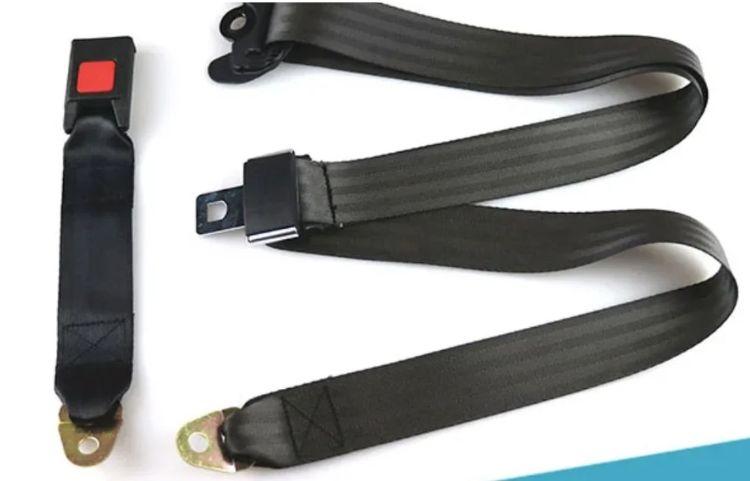
A standard seat belt set usually includes three main parts: webbing, retractor and buckle. The belt is made from extremely durable synthetic fiber, able to withstand great traction without breaking. The cord retractor has a smart sensing mechanism. When you pull slowly, the rope will stretch comfortably. But when there is a sudden stopping force, the system will lock tightly to keep your body from rushing forward.

Basic structural design of seat bell
Mechanism of operation of 3-point belt
Currently, most new cars use 3-point belts. This system immobilizes the user at the shoulders and hips. When the vehicle stops suddenly, the belt will disperse the impact force on hard parts of the body such as the pelvis and chest, instead of focusing on soft, sensitive parts.
Why must you wear a seat belt when driving?
Many people often subjectively think that when driving slowly in the city, there is no need to wear a belt. However, accidents can happen at any time and the seat belt is the fragile line that protects your life.
Reduces the risk of impact on vehicle interior
When there is a collision, according to inertial force, your body will rush forward at a speed equivalent to the vehicle speed before stopping. Without a seat belt, your head and chest could collide directly with the steering wheel, windshield or dashboard. The seat belt will hold you back, preventing these dangerous direct collisions.
Coordinates effectively with the airbag system
Did you know that airbags are only truly safe when they come with belts? The airbag deploys at extremely fast speed and with great force. If you do not wear a seat belt, your body rushing towards the deployed air bag can cause more serious injuries than a normal collision. The straps keep you at a safe distance so the airbag can properly act as a cushion.
Prevents being thrown out of the vehicle
In serious accidents such as vehicle rollovers, being ejected is the leading cause of death. What is a seat belt if not a rope that holds you tightly within the protective steel frame of your car? When kept in the vehicle, your chances of survival increase many times over.

Seat bell keeps you safe when unexpected incidents occur
Classification of popular seat belt types today
Not all seat belts are the same. Depending on the vehicle design, seat position and intended use, seat belts are developed with many different structures to optimize the level of protection, comfort and convenience.
2-point seat belt (Lap belt)
The 2-point belt is the most primitive design of the seat belt, consisting only of a fixed strip of wire across the seat's hips. Basically, it helps keep the body from sliding off the seat when the vehicle moves or brakes suddenly. However, the biggest weakness of this type of rope lies in the lack of control over the upper body. When a collision occurs, the head and chest still tend to rush forward, creating the risk of serious injury to the cervical spine and chest area.
Even in some situations, lap belt can become a double-edged sword. If the impact force is large, all the force will be focused on the abdomen and pelvis, easily causing internal damage. This is the reason why this type of wire is gradually eliminated in modern cars and only appears in some specific locations such as the middle rear seat or on airplanes - where simple, space-saving design is required rather than absolute safety optimization.
Three-point seat belt (Three-point belt)
3-point belts are considered a revolutionary step in the field of automotive safety. This design combines a strap across the hips and a strap across the shoulders, creating a Y-shaped structure that helps keep both the upper and lower body tight.
The core point that makes 3-point ropes become the standard lies in their ability to intelligently disperse impact forces. When an accident occurs, the force is not concentrated in one point but is spread evenly through the shoulders, chest and pelvis - areas that can withstand force better. This greatly reduces the risk of serious injuries such as broken ribs, organ damage or spinal misalignment.
In addition, 3-point harnesses also work effectively with other safety systems such as airbags and emergency restraints. When combined, they form a protective ecosystem that helps keep the body in position and minimize the impact of collisions. Because of the balance between safety - convenience - cost, 3-point belts have now become mandatory equipment on most vehicle models.travelworldwide.

3-point seat belt designed with intelligent force dispersion ability
4 or 5 point seat belt
Unlike common belts, 4-point and 5-point belts are designed specifically for environments requiring extremely high safety such as racing cars or child seats. With more fixation points, this system keeps the body almost glued to the chair. When a collision occurs or the car turns a corner at high speed, the person sitting almost does not move. This is especially important in racing - where even the slightest misalignment can cause loss of control.
However, this certainty comes with inconvenience. Tying and untying the strap takes more time, and feels restrictive when used under normal conditions. That's why this type of wire is not suitable for family cars or daily travel needs. However, for child seats, 5-point straps are the optimal choice. It helps keep the body steadyyoung childreninherently not capable of self-control of posture to ensure maximum safety in all situations.
Readers can refer to:
Should I buy a manual or automatic car? Which option is the most optimal?
How much does the C exam cost? Latest update 2026
Instructions on how to properly tighten the seat belt to ensure safety
Simply wearing a seat belt is not enough, you need to wear it properly for this device to maximize its effectiveness. Below are the basic steps for you to perform correctly.
Adjust shoulder strap position
The shoulder belt should pass through the center of the shoulder and close to the chest, this is the position that helps disperse impact force most effectively. When an accident occurs, the impact force will be transmitted through the collarbone and chest - areas with a sturdy bone structure that can withstand force better.
If you let the string cut into your neck,riskvery large can happen. In a strong collision, the wire can tighten in the neck area, causing damage to the trachea or blood vessels. On the contrary, if you put the rope under your arms, your upper body will hardly be held, making it easier for your body to rush forward and hit hard.car interior. In other words, the shoulder strap position is not only a matter of correct placement but also a decisive factor in keeping the head, neck and chest safe.
Waist belt position
The lower strap should be placed low, hugging the pelvis, instead of resting on the abdomen. This is an extremely important principle but is often overlooked. The pelvis is one of the hardest parts of the body, capable of withstanding great force when a collision occurs. When the wire is properly positioned, force will be transmitted to this bone area, minimizing the risk of injury.
On the contrary, if the wire is located on the abdomen, the entire impact force may be concentrated on internal organs such as the liver, stomach or intestines. This is especially dangerous because internal injuries are often difficult to recognize immediately but can cause serious consequences. Simply put, placing the rope in the right position means you are transferring force from a weak area to a strong area of the body.

Install the belt at hip height
Check tension and clasp
After installing the seat belt, you should not stop there. Take a few seconds to check that the wire is in optimal condition. The strap needs to hug the body tightly but not be too loose. If the rope is slack, your body can still move forward before the rope holds, reducing the effectiveness of the protection. On the contrary, a string that is too tight or twisted will create great pressure in one location, easily causing pain or injury upon impact.
Another important point is to make sure the clasp fits correctly. This is a small but extremely important detail, because if the lock is not secure, the entire system will be ineffective in an emergency situation. You can imagine this: the seat belt only plays its proper role when it is tight, straight and firmly locked. Without one of these three elements, the level of safety will be significantly reduced.
Special notes when using seat belts for children and pregnant women
For special subjects, the use of seat belts needs to be paid more attention to avoid being counterproductive.
Use seat belts for pregnant women
Many pregnant women often worry that the seat belt will cause pressure on the abdomen and affect the baby. However, traffic safety studies have shown that not wearing a belt is the biggest risk, because when a collision occurs, the impact force can directly affect both mother and fetus.
The important point lies in the way the wires are placed. The cross strap needs to go through the middle of the chest, fitting between the two breasts to keep the upper body stable. Meanwhile, the horizontal wire must be placed low below the abdomen, hugging the pelvic area, absolutely not placed on the pregnant belly.
This arrangement helps transfer all impact force to the pelvic area - a place with good force-bearing capacity, instead of directly impacting the uterus. In addition, pregnant women should also adjust the seat to keep a reasonable distance from the steering wheel or dashboard, helpingreduce riskswhen the airbag deploys. Understanding and correctly tightening the seat belt not only protects the mother but is also the safest way to indirectly protect the fetus.
Seat belts and child safety seats
Children are not miniature adults. A child's bone structure, especially the neck and spine, is still developing and is not strong enough to withstand forces like an adult. When using a standard vehicle seat belt, the straps often do not stay in the correct position: the shoulder straps can cut into the neck, and the horizontal straps can easily lie on the stomach. This prevents the impact force from being properly dispersed, increasing the risk of serious injury.
That's why child safety seats are mandatory if you're transporting small children. The chair is specifically designed with a strap system suitable for body size, helping to firmly fix and protect sensitive areas such as the head, neck and spine. Depending on your age and weight, you need to choose the appropriate type of chair such as a backward-facing chair (for newborns) or a forward-facing chair (for older children). When used properly, this system significantly reduces the risk of injury in an accident.

Child safety seats are required if you are transporting small children
Common mistakes when using seat belts for special subjects
In reality, there are many wrong habits that stem from subjectivity or lack of understanding. For example, some pregnant women place the strap across their abdomen for comfort or parents let their children sit in the front seat and share the strap with an adult. These actions pose a huge risk in the event of a collision, because the strap no longer functions properly to disperse force.
In addition, not securing the child seat properly or installing it in the wrong direction also reduces the protection effectiveness. The key point here is: for special subjects, the seat belt needs to be used with the right technique and the right support equipment, instead of just using it out of habit.
Legal regulations and penalties related to seat belts
In Vietnam, wearing seat belts is not only a matter of self-awareness but also a mandatory regulation by law to ensure traffic order and safety.
-
Road traffic laws on wearing seat belts: According to the current Decree, all people sitting in cars in locations equipped with seat belts must wear seat belts when the vehicle is running. This applies to both the driver, the passenger sitting in the passenger seat and the passengers sitting in the rear seats.
-
Penalty for not wearing a seatbelt: If you forget or intentionally do not wear a seatbelt while the vehicle is in traffic, the fine can range from several hundred thousand dong. More importantly, if the person sitting in the car does not wear a belt but the driver still drives the car, the driver can also be fined. So please remind everyone to buckle up before setting off.
Hopefully through this article, you have a better understanding of what a seat belt is and its irreplaceable importance. Seat belts are not just a dry legal regulation, but a care and protection for yourself and your loved ones. If you want to gain a deeper understanding of car safety or are preparing to buy a car, stay tuned8car.vnto update the most practical and useful knowledge!

8Car.vn – Easy rental, quality drive! Our online self-drive car rental platform is ready to accompany you anytime, anywhere:
- Streamlined process: 100% online booking, fast document approval, and flexible deposit policies with no asset collateral worries.
- Diverse fleet: Hundreds of late-model 4–7 seater EVs & gasoline cars, regularly inspected and thoroughly cleaned.
- Complete peace of mind: Transparent pricing with no hidden fees, integrated trip insurance, and 24/7 technical support.
Explore & book now to enjoy special offers and take full control of your journey!
Recent posts
-
 Best Road Trips in Vietnam for Foreign Tourists 26/11/2026
-
 Explore Vietnam by Car: The Ultimate Self-Drive Travel Guide 26/11/2026
-
 Car rental near large urban areas: How to reach customers in the surrounding area? 26/11/2026
-
 Car rental near Noi Bai Airport: What should car owners pay attention to? 26/11/2026
-
 Renting a car with a driver or renting a self-drive car: Which option fits the budget? 26/11/2026
-
 Common car rental needs around Hanoi 26/11/2026
-
 Renting a car or taking a taxi: How to calculate costs for a 2-day trip 26/11/2026
-
 Customers booking cars online: What should be noted in the car rental contract process? 26/11/2026
-
 Checklist of costs to inquire about before confirming a car rental. 26/11/2026
-
 Weekend road trip costs by rental car: How to split expenses per person. 26/11/2026